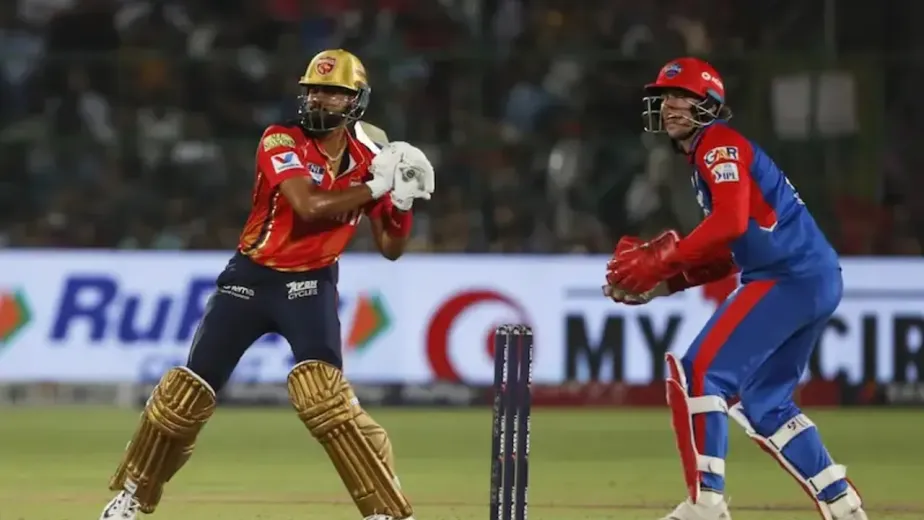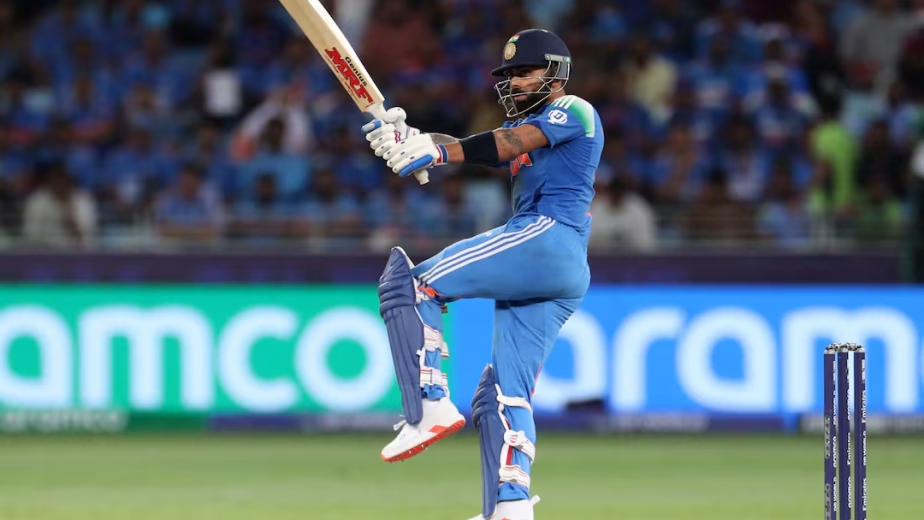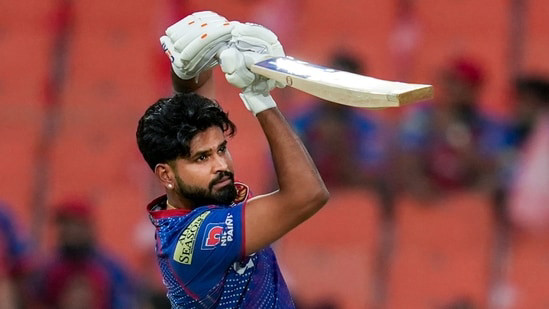
The IPL 2026 season is hitting its most critical phase. With the second half of the tournament now underway across 12 venues nationwide — from Bengaluru to Dharamsala — and the league stage set to culminate on May 24, every match carries enormous weight for playoff qualification.
Live betting, or in-play wagering, is where the smartest money is made. Unlike pre-match bets, in-play betting allows you to read the game’s momentum and react to events as they unfold. The odds shift after every ball, every over, and every wicket — reflecting what happens on the field in real time. Done correctly, this is far more profitable than guessing a match outcome before a single ball is bowled.
Let’s break down exactly how to approach each phase of a T20 innings — the powerplay, the middle overs, and the death — with actionable strategies you can deploy immediately.
Why May Is the Perfect Storm for Live Betting
Before diving into the phase-by-phase tactics, understand what makes May 2026 different:
High-Stakes Context: With just a handful of league matches remaining, the points table is razor-thin. Punjab Kings lead the pack with 11 points from six matches, followed closely by RCB (8 points), SRH (8 points), and Rajasthan Royals (8 points). Every net run rate point matters, forcing teams to push harder and take more risks — which creates volatile betting markets.
Playoff Intensity: The desperation to secure a top-four spot means teams cannot afford to play conservatively. This translates to more aggressive powerplays, riskier middle-over acceleration attempts, and higher-scoring death overs.
Venue Variety: May’s schedule takes teams to some of the most batting-friendly grounds in the tournament — think Wankhede in Mumbai and Chepauk in Chennai — alongside trickier surfaces like Lucknow’s Ekana Stadium, where chasing sides have won over 58% of matches. Venue-specific knowledge is your secret weapon.
Form Players in Full Flow: Abhishek Sharma (323 runs) and Heinrich Klaasen (320 runs) have been devastating at the top of the order, while Anshul Kamboj’s 13 wickets make him the bowler to watch. Betting markets around these in-form players offer consistent value.
Phase 1: Powerplay Betting Strategies (Overs 1–6)
The first six overs set the tone for the entire innings. Fielding restrictions are in place, only two fielders are allowed outside the 30-yard circle, and both batting and bowling teams are executing pre-planned strategies.
Key In-Play Markets for Powerplay
| Market | What It Means | Why It Matters in May |
|---|---|---|
| Over 0.5 runs in 1st over | Will any runs be scored in the first over? | Extremely high hit rate in IPL. Rarely loses unless a wicket falls on ball one. |
| Total runs in powerplay (over/under) | Will the batting side score more or less than a set line (typically 45-55 runs)? | Venue-dependent. Wankhede routinely clears 60, while Lucknow often stays under 45. |
| Fall of 1st wicket (over/under) | Which over will the first wicket fall? | Crucial for momentum bets. Early wicket opens up value on the batting side’s total. |
| Method of 1st dismissal | Caught, bowled, LBW, or run out? | “Caught” is the most common in powerplays as batsmen attack aerially. |
| Top batsman runs (over/under) | Will a specific player exceed a set run line? | In-form openers like Abhishek Sharma and Quinton de Kock consistently clear lines at value odds. |
Strategy 1: Fade the Opening Partnership When the Ball Swings
May in India means evening dew is a real factor, but early in the innings — especially during the 7:30 PM starts — there’s often a brief window where the ball moves. At venues like Wankhede, on strong breeze days, bowlers get enhanced swing and can make early inroads.
What to do: Watch the first two overs closely. If the ball is swinging or seaming, bet against a big powerplay score. The “Total runs in powerplay — under” market will still be priced based on pre-match expectations that assume flat conditions. You’ll get better odds than you should.
Recent example: Mumbai Indians’ opening pair has been vulnerable early, with Rohit Sharma’s hamstring concerns disrupting their rhythm. When MI bats first, the under on powerplay runs has been a profitable play in four of their last six matches.
Strategy 2: Back the In-Form Aggressor
Abhishek Sharma of Sunrisers Hyderabad is currently the Orange Cap holder with 323 runs at a strike rate above 200. The SRH opening duo of Sharma and Travis Head has been relentless in the powerplay, allowing the middle order to tee off later.
What to do: When SRH bats first, bet on “Abhishek Sharma over X runs” (where X is typically 22.5–26.5) or “SRH to score 50+ in powerplay.” The market often under-prices their aggression because historical IPL powerplay averages are lower than what this specific pair consistently produces.
Similarly, Quinton de Kock averages a staggering 125 this season — the highest in the tournament — and his ability to maximise powerplay field restrictions makes him a reliable over-back in the early overs.
Strategy 3: The “Caught” Trap
In the powerplay, batsmen are looking for boundaries. Edges, miscues, and top-edges are the most common form of dismissal because bowlers are attacking the stumps and batsmen are swinging hard.
What to do: Bet on “Method of 1st dismissal — Caught” pre-match or immediately after the first over if it’s still available. In IPL 2026, over 65% of powerplay wickets have been catches. This is a high-volume, medium-odds play that compounds over the season.
Strategy 4: Reacting to the First Over
The first over tells you everything. Did the bowler beat the bat? Was there swing? Did the batsman look nervous?
What to do: If a genuine quick bowler like Jasprit Bumrah or Kagiso Rabada bowls a maiden or a one-run over with multiple plays-and-misses, immediately bet “Under” on the total powerplay runs and “Over” on the over in which the first wicket falls (i.e., it will fall earlier than expected) . The pressure created in the first over often yields a wicket in the second or third.
Phase 2: Middle Overs Betting Strategies (Overs 7–15)
Welcome to the game’s chess match. Fielding restrictions are relaxed, spinners come into play, and the scoring rate typically dips unless a set batsman decides to accelerate.
Key In-Play Markets for Middle Overs
| Market | What It Means | Why It Matters in May |
|---|---|---|
| Total runs in overs 7–15 (over/under) | The middle-over scoring rate. | Spinners dictate this phase. Against quality spin, the under is reliable. |
| Next wicket to fall | Which batsman will be dismissed next? | Batsmen new to the crease are vulnerable against settled spinners. |
| Runs in next over (over/under) | Will the next over go above or below a line? | Crucial for reading match tempo and bowler-batsman matchups. |
| Batsman runs (over/under) | Will a middle-order batsman exceed his line? | Set batsmen often accelerate in the 10th–12th over window. |
| Boundary in next over (yes/no) | Will there be a four or six? | Defensive bowling spells are prime “no” opportunities. |
Strategy 1: Exploit the Spin-Matchup Mismatch
This is the single most profitable live betting angle in T20 cricket. The middle overs are when spinners operate most heavily. If a right-handed batsman who struggles against left-arm orthodox spin faces a bowler like Kuldeep Yadav or Ravindra Jadeja, the bowling side has a massive edge.
What to do: Before the match, identify one or two key matchups. For instance, Heinrich Klaasen is a premier spin-hitter, but his battle against Kuldeep Yadav is always match-defining. If Klaasen survives the early spin overs, his over-line on runs shoots up. If he looks uncomfortable, bet “Under” on his individual total and “Under” on the next over’s runs.
Strategy 2: The 10-Over Momentum Checkpoint
The 10-over mark is the most important live betting window in T20 cricket. By this point, you know:
- Whether the batting side has wickets in hand.
- How the pitch is truly playing (flat, slow, turning, uneven bounce).
- Which bowlers have been effective.
What to do: At the 10-over drinks break, odds for the “Total match runs” and “Innings runs” markets are recalculated. If a team is 80/2 after 10 overs, the pre-match expectation of 180+ might still be possible — but the live odds will reflect a lower total. This is where you find value.
Example from IPL 2026: When Sunrisers Hyderabad reached 182/3 after 16 overs against Punjab Kings, the live win probability surged from 42% to 60%. The market repriced aggressively, and bettors who saw SRH’s momentum building from the 10-over mark onward had already locked in favorable positions.
Strategy 3: Target the “New Batsman” Window
When a wicket falls in the middle overs, the incoming batsman needs time to settle. The first 4–6 balls he faces are his most vulnerable period.
What to do: Immediately after a wicket falls, check the next over’s bowler. If it’s a frontline strike bowler or a spinner who thrives on building pressure (like Ravi Bishnoi, who has 10 wickets this season), bet “Under” on the next over’s runs. The combination of a new batsman and a quality bowler is a recipe for a quiet over.
Conversely, if a set batsman like Tilak Varma is at the crease and a part-timer is brought on, bet “Over” on the next over’s runs. Varma’s record-breaking 101 off 45 balls against Gujarat Titans came precisely from targeting favorable matchups in the middle overs.
Strategy 4: The Pitch Reveal Play
Pre-match pitch reports are helpful, but they’re often wrong or exaggerated. By overs 7–8, you know exactly how the surface is behaving.
What to do: If the pitch is visibly slower and gripping (common in Chennai and Lucknow), bet “Under” on the innings total and “Under” on individual sixes markets. If it’s a true batting paradise (Wankhede, Chinnaswamy), the “Over” on total match sixes becomes viable even if the batting side lost early wickets — because the later batsmen will still find the boundary.
Phase 3: Death Overs Betting Strategies (Overs 16–20)
This is where matches are won and lost — and where live betting markets move the fastest. Bowlers are under maximum pressure, batsmen are swinging at everything, and every delivery can change the odds dramatically.
Key In-Play Markets for Death Overs
| Market | What It Means | Why It Matters in May |
|---|---|---|
| Total runs in last 5 overs (over/under) | Will the batting side score more or less than a line (typically 45-60 runs)? | The most liquid death-over market. Depends heavily on wickets in hand. |
| Total sixes in last 5 overs (over/under) | How many maximums will be hit? | Boundary-hitting ability of the batsmen at the crease is everything. |
| Next over runs (over/under) | Will the next specific over go above or below a line? | Critical for targeting weak death bowlers. |
| Batsman to score a boundary in next over (yes/no) | Will a specific player hit a four or six? | Finishers like Tim David are prime “yes” candidates. |
| Fall of next wicket (yes/no) | Will a wicket fall in the next over? | High-pressure death overs produce wickets via run-outs and mistimed slogs. |
Strategy 1: The “Finisher” Over-Back
Some players are built for the death overs. Tristan Stubbs of Delhi Capitals averages 65.33 this season, while Tim David has a strike rate north of 200. When these players are at the crease in overs 16–20, boundaries flow.
What to do: Identify the designated finisher in each lineup. When they’re batting in the death overs against anything less than the opposition’s best death bowler, bet “Over” on runs in the next over or “Yes” on a boundary being scored.
Strategy 2: Target the Weak Death Bowler
Not every bowler thrives under pressure. In fact, most bowlers see their economy rates balloon in overs 16–20. The key is identifying which bowler is having an off day or has a historical weakness at the death.
What to do: Watch the 15th and 16th overs closely. If a bowler concedes a boundary or two and looks rattled, his next over (if he gets one) is a prime “Over” bet on runs conceded. The market doesn’t always adjust quickly enough to a bowler’s loss of confidence.
Data point: Prasidh Krishna has been excellent at scalping breakthroughs in the middle and death overs for Gujarat Titans, but when he misses his length, he can be expensive. The over-by-over volatility in his death bowling creates exploitable in-play windows.
Strategy 3: The Wicket-Fall Domino
In the death overs, one wicket often leads to two or three. A new batsman coming in with 12 balls left and a required run rate of 12+ is under immense pressure.
What to do: If a wicket falls in the 17th or 18th over, immediately bet “Yes” on another wicket falling in the next two overs. The market overreacts to the first wicket by shortening the batting side’s total runs line, but it often under-prices the probability of a cluster of wickets.
Strategy 4: Live Win Probability Swings
Prediction markets like Octagon AI track live win probabilities throughout the match. When SRH’s win probability jumped 18 percentage points during their batting innings against Punjab Kings, it reflected a genuine shift in match state.
What to do: Use live win probability trackers as a second opinion. If the win probability has swung significantly but the betting odds haven’t fully caught up, you have a brief arbitrage window. For example, if a team’s win probability goes from 40% to 55% but their odds have only moved from 2.50 to 2.20, there’s still value in backing them.
Advanced In-Play Tactics: Beyond the Phases
Tactic 1: The DLS Algorithm Advantage (Rain-Affected Matches)
May in India occasionally brings pre-monsoon showers. When rain interrupts play, the Duckworth-Lewis-Stern (DLS) method recalculates targets.
What to do: A delay in odds shifts means rain-aware bettors can place strategic in-play bets before the DLS algorithm kicks in. There’s also a psychological edge: when a game resumes after a delay, casual bettors often double down on the original favorite without re-evaluating revised conditions or the altered match tempo.
Tactic 2: The Toss Reaction Window
The toss is the first major market-moving event of any IPL match. At venues like Wankhede, where chasing sides have won 68 of 124 IPL matches, the toss winner almost always elects to field first.
What to do: Immediately after the toss — before the first ball is bowled — bet on the “Match Winner” market. The odds shift in favor of the chasing team, but there’s a 30–60 second window before the market fully reprices. Being quick on the trigger gives you better odds than waiting.
Tactic 3: Cash Out Strategically
Many platforms, including Sky247, offer cash-out options during live matches. This allows you to lock in profits before the match concludes if your bet is winning but the momentum is shifting.
When to cash out:
- When your team is chasing and loses a set batsman in the 18th over: The win probability might still be in your favor, but the required run rate and new batsman’s struggles make a collapse possible. Cash out a portion.
- When you backed a player to score 30+ runs and he’s on 28 with 2 overs left but facing the opposition’s best bowler: Take the partial profit.
When not to cash out:
- When the momentum is firmly with your bet and the odds haven’t yet reflected the full probability shift.
- When you’ve backed a bowler to take 2+ wickets and he’s on 1 with 3 overs left and bowling to the tail.
Tactic 4: The Platform Matters
Not all betting platforms are created equal for live IPL betting. The best platforms update odds after every delivery, offer a wide range of in-play markets (top batsman, total runs in an over, method of dismissal, session runs), and provide real-time statistics to inform your decisions.
Sky247, for example, offers competitive odds across dozens of cricket competitions, including every IPL match, with a variety of betting markets and a user-friendly mobile experience. Fast bet placement and reliable cash-out functionality are non-negotiable when you’re reacting to live events.
Quick Reference: May 2026 Betting Cheat Sheet
| Phase | Best Market | Key Trigger | Player to Watch |
|---|---|---|---|
| Powerplay (1–6) | Total runs — Under | Swing/seam in first 2 overs | Abhishek Sharma (SRH) |
| Powerplay (1–6) | Method of 1st dismissal — Caught | Aggressive aerial shots | Quinton de Kock (MI) |
| Middle Overs (7–15) | Next over runs — Under | Quality spinner vs. new batsman | Kuldeep Yadav (DC) |
| Middle Overs (7–15) | Batsman runs — Over | Set batsman vs. part-timer | Tilak Varma (MI) |
| Death Overs (16–20) | Total sixes — Over | Finishers at the crease | Tim David (RCB) |
| Death Overs (16–20) | Next wicket — Yes | Cluster wicket potential | Prasidh Krishna (GT) |
| All Phases | Cash out (partial) | Momentum shift against your bet | — |
Final Thoughts: Bet the Match, Not the Hype
Live betting on IPL cricket rewards patience, observation, and a clear understanding of match situations. The best in-play bettors don’t gamble — they watch, they analyze, and they strike when the odds misprice the reality on the field.
As we enter the final stretch of IPL 2026 in May, remember:
- Powerplays are about aggression and early wickets.
- Middle overs are about spin matchups and pitch reading.
- Death overs are about finishers and pressure.
Master these three phases, stay disciplined with your bankroll, and you’ll turn this IPL season into your most profitable one yet.
Ready to Bet Live on Every IPL Match? Join Sky247 Cricket!
The IPL 2026 season is entering its most thrilling phase, and you don’t want to miss a single moment of the action — or a single winning opportunity.
At Sky247 Cricket, you get:
- Real-time odds updated after every ball
- Deep in-play markets covering everything from powerplay runs to death-over sixes
- Fast, secure deposits and withdrawals tailored for Indian users
- Competitive odds across every IPL fixture
Whether you’re backing Abhishek Sharma to clear his runs line, betting on a middle-over collapse, or predicting the total sixes in the death overs, Sky247 Cricket gives you the platform to turn your cricket knowledge into winning bets.
Sign up with Sky247 Cricket today and experience live IPL betting at its finest. Play responsibly.