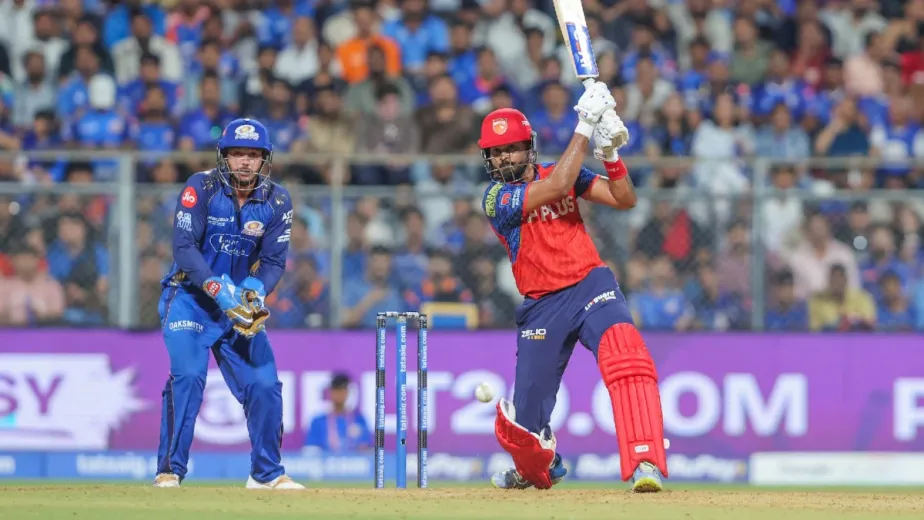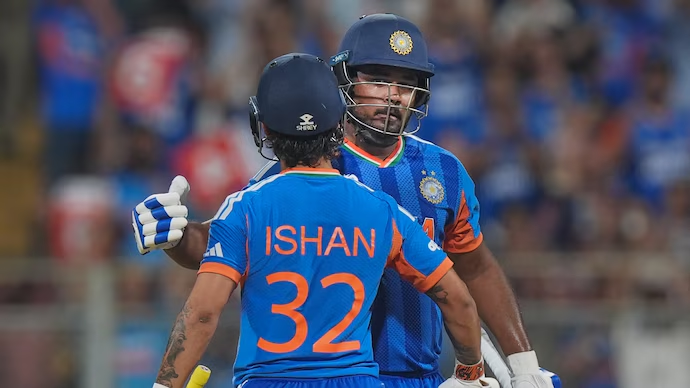
The 2026 cricket season has been a masterclass in leadership. From India’s triumphant T20 World Cup campaign on home soil to the high-stakes drama of the IPL captaincy carousel, the year has offered profound insights into what it truly means to lead in modern cricket.
Leadership in cricket extends far beyond tactical decisions on the field. It’s about managing egos, nurturing talent through rough patches, making bold selection calls, and—above all—inspiring a group of individuals to perform as one unit when it matters most.
As we reflect on the 2026 campaign, several powerful lessons emerge from the stories of captains who succeeded, those who evolved, and the new leaders stepping up to the challenge.
Lesson 1: True Leadership Shines When Personal Form Falters
The Story: Suryakumar Yadav’s T20 World Cup Triumph
Perhaps the most compelling leadership story of the year comes from Suryakumar Yadav. The Indian T20I captain entered the T20 World Cup 2026 as the world’s premier batter, but the tournament presented an unexpected challenge. Apart from a rescue act of 84* off 49 in the opener against the USA, Yadav managed just 158 runs across his other eight innings .
Yet, when the final ended in Ahmedabad, Suryakumar Yadav was holding the World Cup trophy aloft .
The Lesson:
As legendary Australian captain Ricky Ponting observed, the real measure of captaincy lies in how a leader behaves when their own form deserts them. “I know, as a former captain, when you’re not batting at your absolute best, captaincy can become really difficult. And when you are batting well, captaincy can become really easy,” Ponting noted .
Suryakumar’s ability to separate his personal performance from his leadership duties offers a crucial lesson: captaincy is not about you—it’s about the team. When your own game is struggling, the temptation can be to withdraw inward, to focus on fixing your own technique. Great leaders do the opposite. They double down on their investment in others, knowing that the team’s success will ultimately define their legacy .
Lesson 2: Faith in Struggling Players Can Unlock Greatness
The Story: Sanju Samson’s Redemption Arc
One of the defining narratives of India’s World Cup win was the resurrection of Sanju Samson’s international career. The wicketkeeper-batter’s journey through the tournament was anything but smooth. He was initially used as cover for Abhishek Sharma, then dropped, and later recalled for a crucial fixture against Zimbabwe .
What followed was extraordinary. A blazing 97* in a virtual knockout against the West Indies sparked a run of form that saw Samson amass 321 runs in just five innings—the most by an Indian in a single T20 World Cup. His knocks of 89 (42) in the semi-final against England and 89 (46) in the final against New Zealand were instrumental in India’s triumph .
The Lesson:
Ponting highlighted the significance of India’s faith in Samson. “For India to stick with him at the top there, that was a big call to make. A big decision, but one that worked out really well in the end,” he said .
The lesson is timeless: talented players need to feel trusted. When a captain and coaching staff communicate “we believe in you,” it creates psychological safety. As Ponting put it, “Just a pat on the back or an arm around the shoulder to say, ‘we’re sticking with you, we believe in you.’ When you’ve got the quality that Sanju’s got, and the confidence of the captain and coach behind you, that’s when great things can happen” .
In a high-pressure environment like international cricket, technical ability is only half the battle. The other half is mental freedom. Samson’s transformation from fringe player to match-winner is a testament to the power of sustained belief.
Lesson 3: Managing the Young and the Vulnerable Defines Culture
The Story: Abhishek Sharma’s Turbulent Tournament
Abhishek Sharma entered the T20 World Cup 2026 as the ICC No. 1-ranked T20I batter. But cricket has a cruel way of humbling even the best. The young southpaw endured three consecutive ducks, followed by low scores of 15, 10, and 9. Before the final, he had managed just one fifty .
Yet, on the biggest stage of all, Abhishek produced the fastest fifty of the 2026 edition—52 off 21 balls—to set up India’s victory.
The Lesson:
Ponting emphasized where the real work happens: “You don’t have to worry about the staples, it’s more the guys on the fringe and the younger guys going up and down with their emotions and battling with their form, the ones you have to spend the most time with” .
This is a profound insight into leadership. The “staples”—the senior pros, the established match-winners—usually know how to manage themselves. The real test of a captain’s culture is how they treat the young player fighting for form, the fringe player unsure of their place, the talent struggling with confidence.
Suryakumar’s ability to keep Abhishek engaged, motivated, and believing in himself—even through a run of low scores—paid the ultimate dividend when it mattered most. Leaders are defined by how they treat their most vulnerable members.
Lesson 4: Natural Leaders Emerge Through Domestic Success
The Story: Ishan Kishan’s Rise to SRH Captaincy
Ahead of IPL 2026, Sunrisers Hyderabad faced a fascinating decision. With Pat Cummins likely to miss the tournament, they needed a new captain. The contenders were Abhishek Sharma—part of the SRH set-up for seven seasons—and Ishan Kishan, a recent acquisition .
SRH chose Kishan. The reason? His proven leadership record in domestic cricket.
Kishan had guided Jharkhand to their maiden Syed Mushtaq Ali Trophy title, scoring 517 runs at an astonishing strike rate of 197.32, including a 51-ball hundred in the final against Haryana .
The Lesson:
Former Jharkhand teammate Shahbaz Nadeem offered revealing insights into Kishan’s leadership style. “Captaincy is something that comes naturally. Leaders are born. You cannot make leaders. He has that attitude,” Nadeem said .
Two qualities stood out:
- Making youngsters comfortable: “He makes all the youngsters comfortable and gives them freedom. It never feels like there is a captain among you. He is just another teammate.”
- The keeper’s advantage: “A keeper naturally reads the game better. They understand the pitch better and have the best vantage point” .
The lesson here is twofold. First, leadership potential is often visible early. Kishan had captained India at the U-19 World Cup and led Jharkhand for years. Second, domestic cricket is the ultimate leadership training ground. As Nadeem noted, captaining in domestic cricket is harder than in the IPL, where you have the best players. Navigating varied quality and limited resources builds resilience and adaptability .
Lesson 5: Lead from the Front—With Bat and Ball
The Story: Hardik Pandya’s Imperative at Mumbai Indians
For Hardik Pandya, the 2026 IPL season represents a crossroads. After a difficult first season as Mumbai Indians captain in 2024 (finishing bottom) and a somewhat improved 2025 (fourth place), the five-time champions are still searching for their first trophy since 2020 .
Former Indian spinner Harbhajan Singh offered direct advice: “I think Hardik Pandya needs to unleash his real Hardik Pandya version. He needs to bring his A game to the table. Once he starts playing his A game, not just as a batter but as a bowler as well, it will make a huge difference” .
The Lesson:
Harbhajan’s point speaks to a fundamental leadership principle: captains must lead from the front. “When a captain leads from the front and shows the way, everyone follows,” he said .
For Pandya, this means returning to the all-rounder who can bowl four overs, bat with explosive power, and influence games in multiple phases. His bowling in the T20 World Cup was exceptional. Translating that to the IPL is essential—not just for team balance, but for the psychological impact of seeing your captain making things happen .
The lesson applies broadly: captains cannot afford to be passengers. Even when personal form dips (as with Suryakumar), the effort, the energy, and the visible commitment must never waver. Teams take their cues from the leader. If the captain is fully engaged, the team will be too.
Lesson 6: Embrace the Tactical Revolution
The Story: T20 World Cup 2026’s Strategic Shift
The 2026 T20 World Cup witnessed a seismic shift in tactical approach. A record 11 totals of 200+ were scored—more than double the previous high of five in 2007 . Teams embraced ultra-aggressive batting, with eight sides maintaining a run rate of 8.5 or more.
Crucially, the “anchor” role appears to be disappearing. Eight teams had top-three batters with a combined strike rate of 150+, and South Africa led with an astonishing 162.68 .
The Lesson:
Modern captains must be tactically agile. The old certainties—preserve wickets, build a platform, accelerate at the death—are being challenged. Teams are now filling their XIs with all-rounders, batting deep to number eight, and attacking from ball one .
Captaincy in this environment requires:
- Boldness: The courage to send attacking batters early.
- Flexibility: Willingness to adapt roles based on matchups.
- Data literacy: Understanding match-ups, ground dimensions, and opposition weaknesses.
As Afghanistan captain Rashid Khan put it, “It’s all up to you how you manage your deliveries… What are the best deliveries you can bowl into the batsman? That is what I believe in” . Tactical intelligence, combined with self-belief, defines modern leadership.
Lesson 7: The Passing of the Torch
The Story: A New Generation of IPL Captains
The IPL 2026 captain’s list tells a story of transition. Nine of the ten captains are Indian—the only exception being Pat Cummins at SRH .
The list features:
- Ruturaj Gaikwad (CSK), stepping into MS Dhoni’s shoes.
- Hardik Pandya (MI), leading the franchise Rohit Sharma commanded for a decade.
- Riyan Parag (RR), taking over after Sanju Samson’s trade to CSK.
- Rajat Patidar (RCB), who led the franchise to their maiden title in 2025 .
The Lesson:
Leadership transitions are never easy, especially when following legends. Dhoni’s shadow looms large in Chennai. Rohit’s legacy in Mumbai is unparalleled. But as the IPL demonstrates, the game must evolve, and new leaders must emerge.
The success of this transition generation will depend on:
- Respecting the past while forging their own path.
- Building authentic relationships with players who may have been teammates moments ago.
- Handling expectations with composure.
Patidar’s immediate success—winning the title in his first season—shows what’s possible when a leader embraces the challenge rather than being overwhelmed by it .
Conclusion: The Heart of Leadership
As the 2026 cricket campaign demonstrates, leadership is not about titles or tactics alone. It’s about:
- Resilience when your own form fails (Suryakumar Yadav).
- Faith in struggling talent (Sanju Samson).
- Compassion for the young and vulnerable (Abhishek Sharma).
- Authenticity that makes teammates feel valued (Ishan Kishan).
- Visible commitment that inspires others (Hardik Pandya).
- Tactical courage to embrace change (T20 World Cup strategies).
- Grace in transition (the new generation of IPL captains).
Whether on the international stage or in the cauldron of the IPL, these qualities transcend the boundary rope. They are lessons not just for cricket, but for leadership in any field.
As Ricky Ponting wisely observed, the real stories of leadership emerge behind closed doors—in the conversations, the encouragement, the quiet investments in people . The 2026 campaign has been rich with such stories.
Want to stay updated on the latest cricket news, in-depth analysis, and expert opinions on the game’s greatest leaders and moments?
Visit Sky247 Cricket now for comprehensive coverage of the 2026 season and beyond!