This educational guide explores the evolution of cricket umpiring, including on-field officiating, the Decision Review System (DRS), Hawk-Eye technology, UltraEdge, ball tracking, third umpires, player reviews, ICC regulations, and the future of officiating in cricket. The article is intended for educational purposes and is suitable for cricket fans, players, coaches, and students interested in understanding modern umpiring.
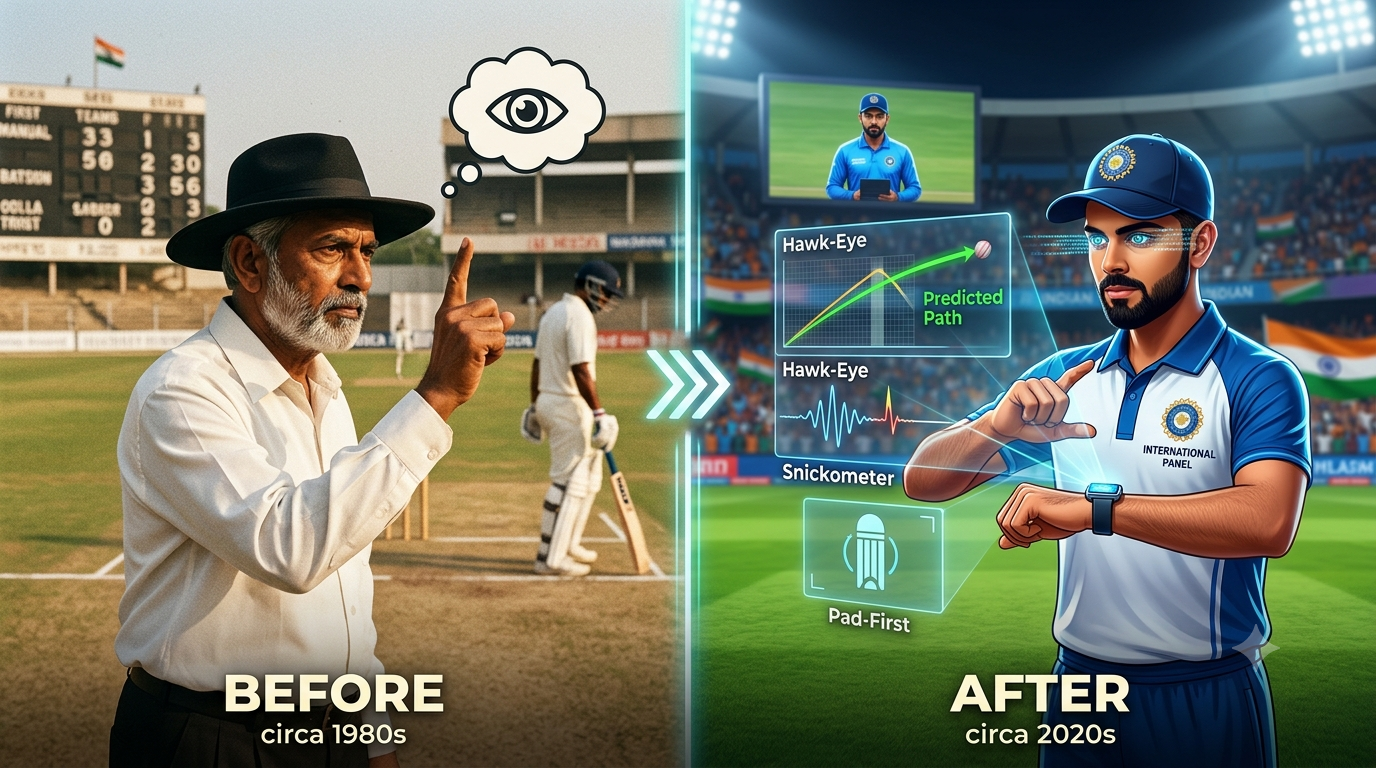
Cricket has always relied heavily on the judgment of its umpires. For decades, officials made split-second decisions using only their experience, positioning, and eyesight. While human judgment remains central to the game, modern technology has dramatically changed how crucial decisions are made.
Today, tools such as the Decision Review System (DRS), Hawk-Eye, UltraEdge, and high-speed cameras assist umpires in making more accurate calls while preserving the spirit of cricket.
This guide explains how cricket umpiring has evolved and how technology continues to shape the game in 2026.
The Traditional Role of the Umpire
On-field umpires remain responsible for enforcing the Laws of Cricket throughout every match.
Their duties include:
- Judging LBW appeals.
- Calling wides and no-balls.
- Determining catches.
- Managing player conduct.
- Monitoring fair play.
- Ensuring match regulations are followed.
Even with technological assistance, the on-field umpire remains the primary decision-maker.
Why Technology Was Introduced
As cricket became faster and more competitive, controversial decisions became increasingly common.
Technology was introduced to:
- Reduce obvious errors.
- Improve consistency.
- Increase transparency.
- Support umpires in difficult situations.
- Strengthen confidence in officiating.
The objective is assistance—not replacement.
What Is DRS?
The Decision Review System (DRS) allows teams to challenge certain umpiring decisions.
Depending on the format and playing conditions, teams receive a limited number of unsuccessful reviews.
Common review situations include:
- LBW decisions.
- Caught behind appeals.
- Bat-pad catches.
- Edge detection.
DRS has become an integral part of international cricket.
Hawk-Eye Technology
Hawk-Eye uses multiple cameras to track the cricket ball throughout its journey.
It helps evaluate:
- Ball trajectory.
- Pitching location.
- Impact point.
- Predicted path toward the stumps.
This technology is primarily used during LBW reviews.
UltraEdge
UltraEdge detects faint contact between the bat and the ball.
Using synchronized audio and visual data, officials can determine whether:
- The ball touched the bat.
- It brushed the glove.
- No contact occurred.
UltraEdge is especially valuable for close caught-behind appeals.
Third Umpires
The third umpire reviews situations that require additional video analysis.
Responsibilities often include:
- Run-outs.
- Stumpings.
- Boundary decisions.
- Fair catches.
- Certain no-ball checks.
Their decisions complement those of the on-field officials.
No-Ball Technology
High-speed cameras now assist in identifying front-foot no-balls.
This reduces human error while allowing on-field umpires to concentrate on other aspects of the delivery.
Technology has significantly improved consistency in this area.
Umpire’s Call
One unique feature of DRS is Umpire’s Call.
When predictive technology indicates only marginal evidence to overturn the original decision, the on-field call is retained.
This balances technological assistance with the authority of the match officials.
Human Judgment Still Matters
Technology cannot replace every aspect of umpiring.
Officials continue to make decisions involving:
- Player behaviour.
- Dangerous play.
- Time management.
- Light conditions.
- Weather interruptions.
- Spirit of Cricket considerations.
Experience remains invaluable.
Challenges of Modern Officiating
Modern umpires work under intense pressure.
Challenges include:
- Fast-paced T20 matches.
- Constant television scrutiny.
- Split-second decision-making.
- Managing player expectations.
- Applying evolving playing conditions.
Preparation and communication are essential.
Training Modern Umpires
Professional umpires now receive extensive education covering:
- Laws of Cricket.
- Match simulations.
- Video review.
- Fitness.
- Communication.
- Technology usage.
Continuous development helps officials adapt to the changing game.
Artificial Intelligence and Cricket Officiating
AI is increasingly supporting officiating systems.
Applications include:
- Video analysis.
- Ball tracking refinement.
- Automated data processing.
- Performance reviews.
- Decision accuracy analysis.
However, AI currently assists officials rather than replacing them.
Future Trends
Several innovations may influence umpiring over the coming years.
Improved Ball Tracking
Enhanced camera systems continue increasing accuracy.
Faster Reviews
Advances in computing reduce review times.
Better Broadcast Integration
Fans receive clearer visual explanations of complex decisions.
Continued Human Oversight
Despite technological progress, on-field umpires will remain central to officiating.
Why Fans Benefit
Modern officiating provides several advantages for spectators.
Fans now enjoy:
- Greater transparency.
- Better understanding of decisions.
- Fewer controversial errors.
- Improved television coverage.
- More confidence in important match outcomes.
Technology has enhanced both fairness and the viewing experience.
Conclusion
Cricket umpiring has undergone one of the most significant transformations in the sport’s history. While experienced officials remain at the heart of every match, technologies such as DRS, Hawk-Eye, UltraEdge, and third-umpire reviews have greatly improved decision accuracy and transparency.
As artificial intelligence and sports technology continue to evolve, the future of cricket officiating will likely become even more precise. Yet the knowledge, composure, and judgment of skilled umpires will remain an essential part of the game.